
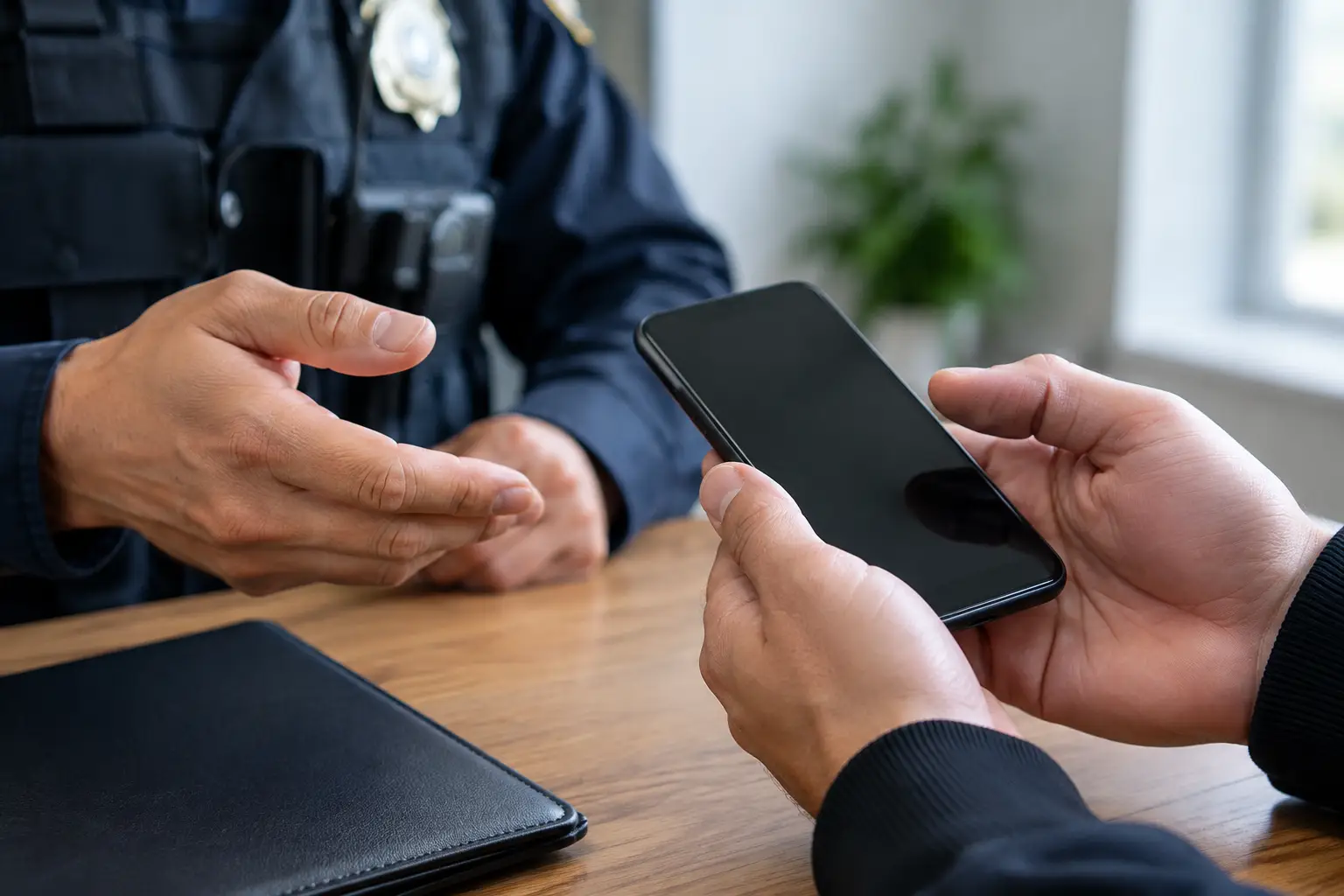
A phone can hold years of private information: messages with family, photos, banking activity, location history, health details, work files, and access to cloud accounts. When an officer asks to look through it, the pressure of a roadside stop or arrest can make that request feel nonnegotiable. But can police search phones simply because they have stopped or arrested someone? Usually, no. In many situations, police need a warrant before searching the digital contents of a phone.
That answer has important limits. Consent, an emergency, and the precise language of a warrant can all change the analysis. If police have taken your phone, searched it, or are asking for a passcode, the details matter immediately. A criminal defense attorney can evaluate whether law enforcement followed the law and whether evidence should be challenged.
Can Police Search Phones After an Arrest?
An arrest does not automatically give police permission to search everything stored on a phone. The U.S. Supreme Court has recognized that modern cell phones contain far more personal information than physical items people carry in a pocket. As a general rule, officers need a warrant to review a phone’s digital contents, even when they have lawfully arrested its owner.
Police may generally take possession of a phone found on an arrested person to preserve it as potential evidence and to ensure it is not used as a weapon. Taking the phone, however, is different from opening it and reading texts, viewing photos, reviewing applications, or searching stored files.
This distinction can be critical in a Texas criminal case. A phone may be seized during a DWI, drug, assault, theft, or other investigation, but the prosecution still must establish that the search itself was lawful. A warrant may be required before investigators can examine the information inside.
A Traffic Stop Does Not Create a Phone Search Right
A routine traffic stop is not a blank check to search a driver’s phone. An officer may ask questions, request identification and insurance information, and investigate facts that create reasonable suspicion or probable cause. That does not mean the officer can scroll through your messages because your phone is sitting in a cup holder or because a notification appears on the screen.
An officer may see information that is already plainly visible, but a visible screen is not the same as authority to open applications or search the device. If a phone is evidence of a suspected offense, police may be able to seize it while they seek a warrant. The authority to hold a phone and the authority to search its contents are separate questions.
Drivers should also understand that refusing consent to a phone search is not the same as resisting an officer. You can state clearly and calmly: “I do not consent to a search of my phone.” Do not physically interfere, argue at length on the roadside, or try to destroy or hide information. Ask whether you are free to leave and request an attorney if you are under arrest or facing questioning.
When Consent Changes the Situation
Consent is one of the most common ways a phone search becomes lawful without a warrant. If a person voluntarily agrees to a search, police may rely on that consent. The scope of consent matters. Saying an officer may check one item does not necessarily mean the officer may examine every application, photograph, account, and conversation on the device.
The real-world problem is that consent is often requested in stressful circumstances. An officer may say that agreeing will “make this easier” or may ask for a passcode while several officers are present. Those circumstances do not automatically make consent invalid, but they can matter when a court evaluates whether the agreement was truly voluntary.
Do not assume that handing an officer an unlocked phone is harmless. It may be treated as consent depending on what was said and done. If you do not want to permit a search, say so directly. If police already have the phone, do not provide a passcode simply because you feel pressured. Request legal counsel.
Emergency Exceptions Are Narrow and Fact-Specific
Police may sometimes search a phone without a warrant when there is a genuine, immediate emergency. This is often called an exigent-circumstances exception. For example, officers may argue that immediate access was necessary to locate a missing person, address an imminent threat to safety, or prevent serious harm.
An emergency exception is not created merely because investigators believe a phone may contain evidence. Courts look closely at whether there was a real need to act before a warrant could be obtained. Concerns that a person might delete information or that a device might be remotely wiped do not automatically authorize a full search. Officers can often secure the phone while seeking judicial approval.
Other settings can involve different rules. Searches connected to international borders, probation conditions, school settings, or certain workplace investigations may raise separate legal issues. Federal and state law can also intersect. These cases require careful review rather than broad assumptions about what police can do.
What a Phone Search Warrant Must Cover
A warrant is not permission to search without limits. It should identify the device to be searched, describe the suspected offense, and set out the categories of information investigators are authorized to seek. The proper scope may depend on the alleged crime and the time period under investigation.
For example, a warrant related to an alleged drug transaction may seek communications, call logs, location data, or photographs connected to a particular period. A broad review of years of unrelated personal information may raise serious questions. Investigators also may use forensic tools to copy data from a device, which can make the scope and execution of a warrant especially significant.
A lawyer reviewing a phone-search case may examine whether probable cause supported the warrant, whether the warrant was too broad, whether officers searched beyond its terms, and whether the information actually came from the phone or a connected cloud account. These are not technical details. They can affect what evidence the government may use and how the case should be defended.
Passcodes, Face ID, and Fingerprints
Questions about unlocking a phone can be legally complicated. Courts have treated passcodes, fingerprints, and facial recognition differently in various circumstances, and the law continues to develop. Whether the Fifth Amendment protects a person from being compelled to provide a passcode can turn on facts such as what the government already knows and what it is trying to prove.
Biometric unlocking, such as a fingerprint or Face ID, raises its own constitutional issues. Do not try to resolve those questions by guessing during an encounter with law enforcement. State that you want to speak with an attorney before answering questions or assisting with access to your device.
Steps to Take if Police Have Searched Your Phone
Write down what happened as soon as you can. Record who took the phone, what officers said, whether you were asked for consent, whether you gave a passcode, and whether police showed you a warrant. Preserve paperwork, property receipts, screenshots, and any case documents you receive.
If charges are pending, tell your attorney about the phone at the beginning of the representation. Digital evidence may shape the prosecution’s theory, but it may also reveal weaknesses in the investigation. A disciplined defense requires reviewing the timeline, the seizure, the warrant process, the data extraction, and every statement attributed to the device.
At Melton & Griffin, careful preparation begins with the facts that can determine whether government evidence holds up in court. If police have searched your phone or are trying to access it, act promptly. Protecting your privacy and your future may depend on what happened in the first hours of the investigation.

